Why Should You Start by Learning the Kana?
The short answer is that learning hiragana and katakana is not optional: if you want to read manga in Japanese, you’re going to have to learn to read the kana. Delaying your start with these two parts of the Japanese writing system will only slow you down in the long run, so get started now.
Start with ひらがな
While there are 3 writing systems used in Japanese, you should first learn hiragana. This is because hiragana is the main and most common writing system, will be the foundation you use for learning katakana, and is usually the phonetic notation that accompanies (and lets you read) 漢字 (kanji) in manga.
Hiragana contains 46 unique phonetic characters known as the 五十音(ごじゅうおん) (gojūon), but also includes variations and combinations of these 46 characters known as 濁音(だくおん)(dakuon), 半濁音(はんだくおん) (handakuon), and the 拗音(ようおん) (yōon).
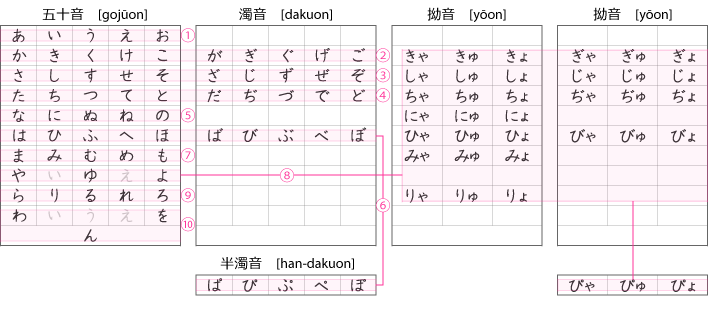
Unlike English, Japanese is phonetic, meaning that you will know how to pronounce any word by reading the hiragana that makes up the word.
Your goal with learning hiragana is to be able to pronounce any word written in hiragana.
The best (and free) guide for learning hiragana has been prepared by Tofugu. Click the image below to open up a copy of this guide, or click here to go to the page at tofugu.com that has this guide.
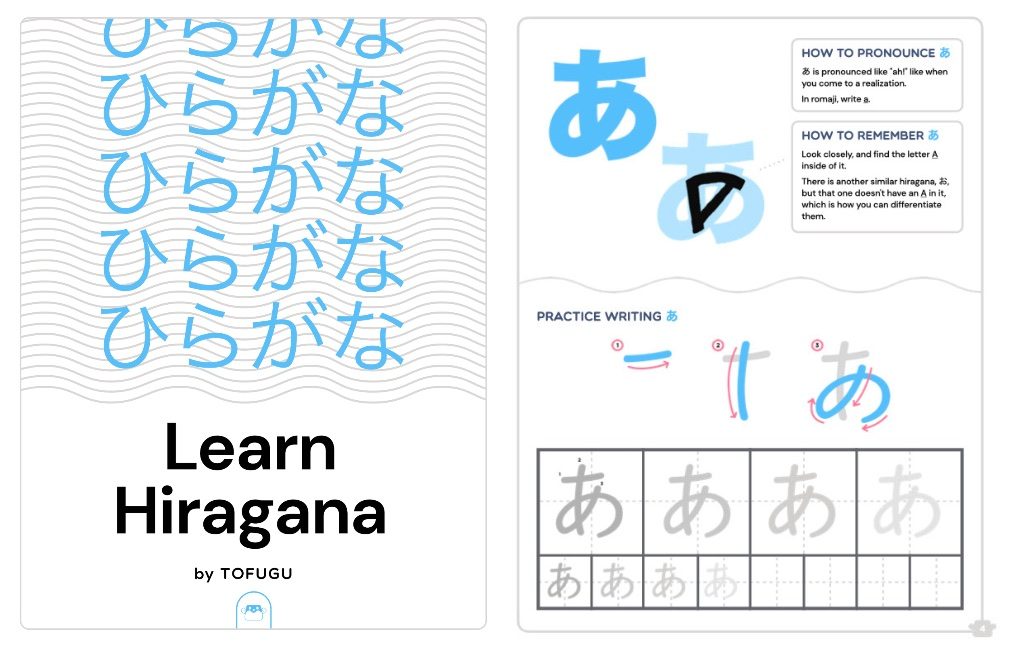
After you have gone through the Learn Hiragana guide by Tofugu, you’ll need to review the characters again. Tofugu makes this easy with their free online kana quiz tool. The explanation for how it works is here.
Your goal will be to reproduce the correct pronunciation for all kana included in hiragana. You can test your ability by selecting “All Kana” in the “Practice Hiragana” selection.
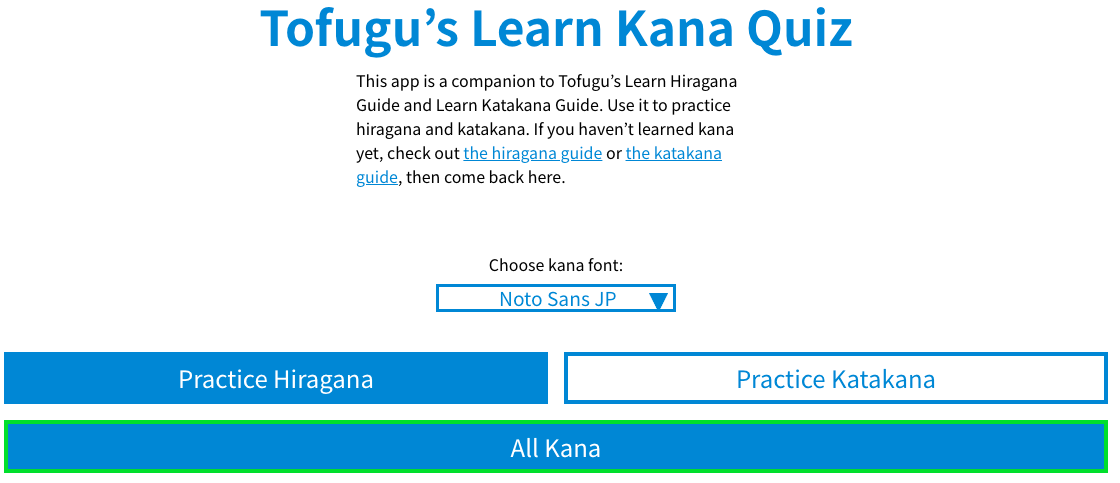
Try the quiz only once per day. If you get some characters wrong, practice those characters again later in the day. Once you can write out the correct phonetic sounds for each hiragana character in one go, you can move on to learning katakana.
Next Learn カタカナ
Once you have learned hiragana, move on to katakana. Think of katakana as the “cursive” version of hiragana. Katakana has 46 characters that each map directly onto hiragana, and represent a different way of writing the phonetic sounds that make up Japanese. Katakana is commonly used in a variety of instances, but in manga is most commonly used as sound effects or for stylistic effect.
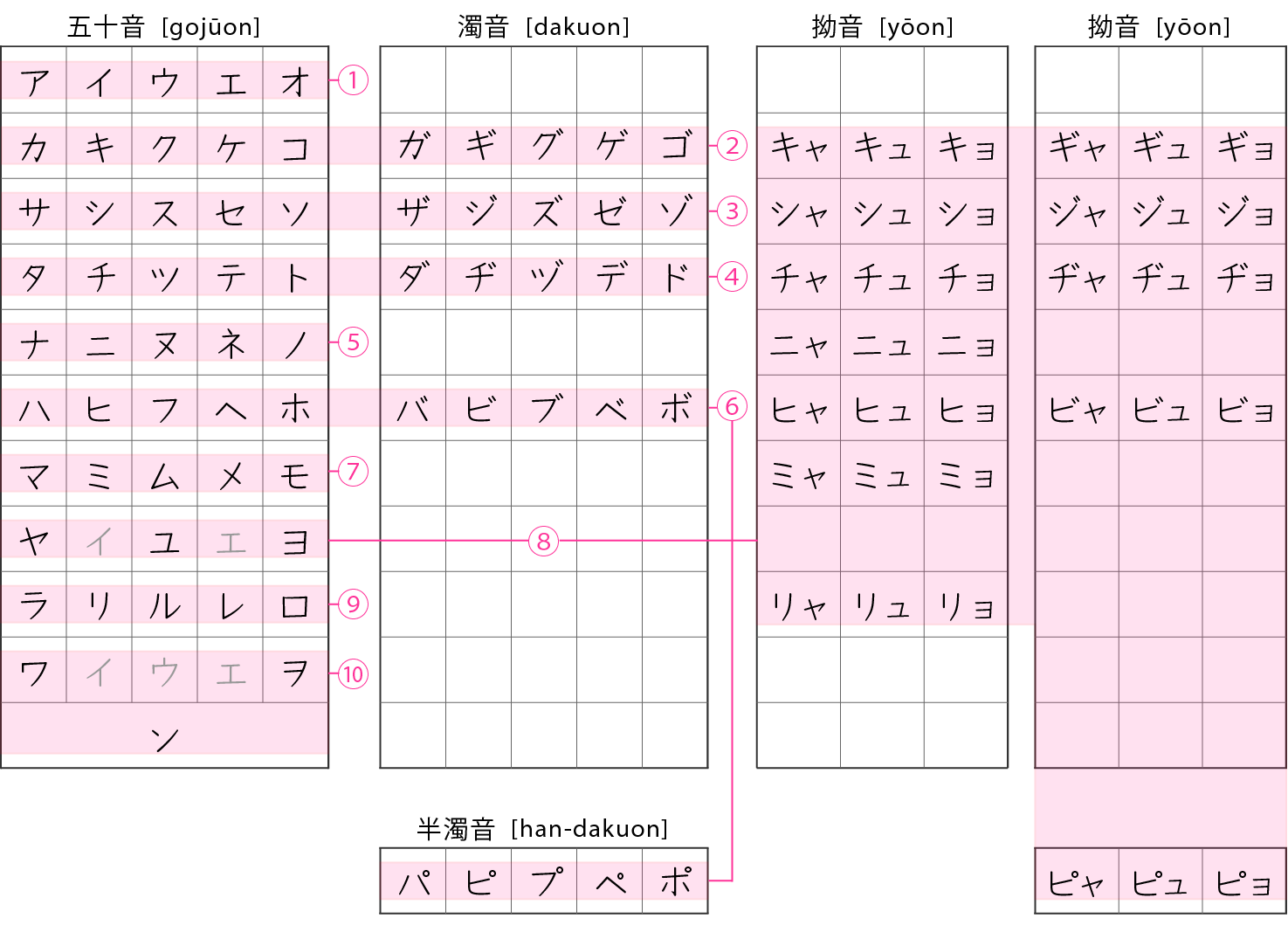
Your goal with learning katakana is to be able to pronounce any word written in katakana.
The best (and free) guide for learning katakana has been prepared by—you guessed it—Tofugu. Click the image below to open up a copy of this guide, or click here to go to the page at tofugu.com that has this guide. The same note regarding mnemonics in the section on hiragana applies equally here—don’t spend time learning mnemonics but if they help you initially remember, that’s great.
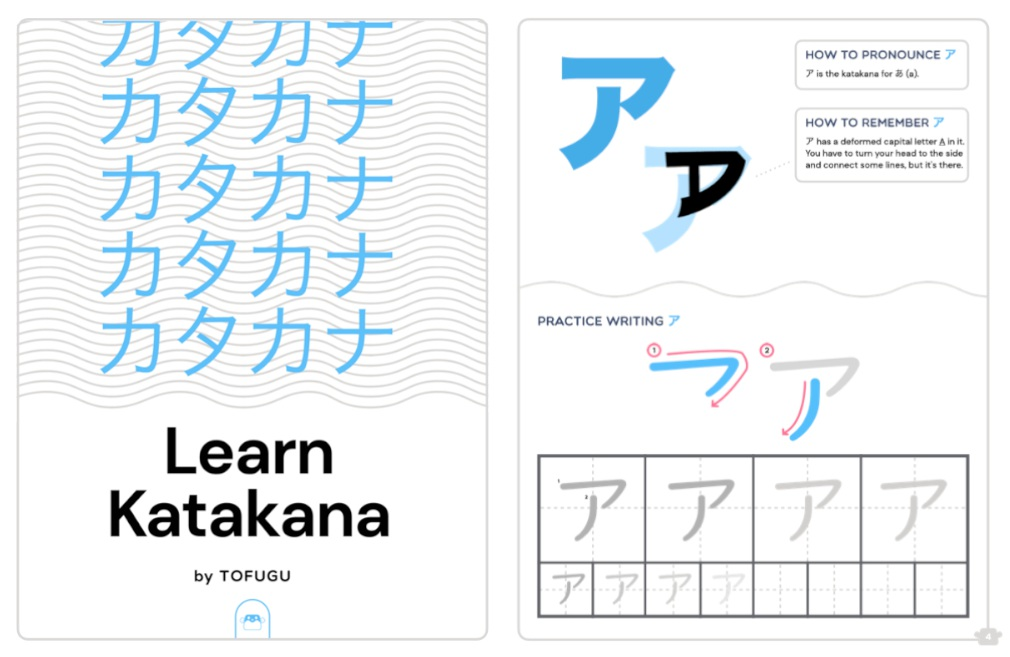
As with Hiragana, once you have gone through the Learn Katakana guide by Tofugu, you’ll need to review the characters again. Use Tofugu’s free online kana quiz tool again, but this time select “All Kana” in the “Practice Katakana” section.
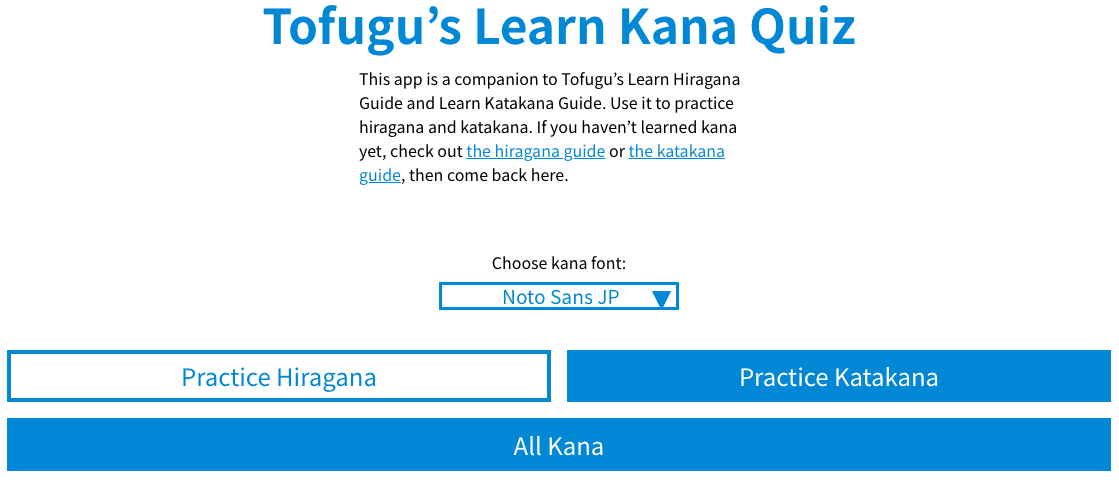
Once you can reproduce the correct pronunciation for all kana included in katakana syllabary, you can move on to the next step. グッジョブ!
Skip 漢字 for Now.
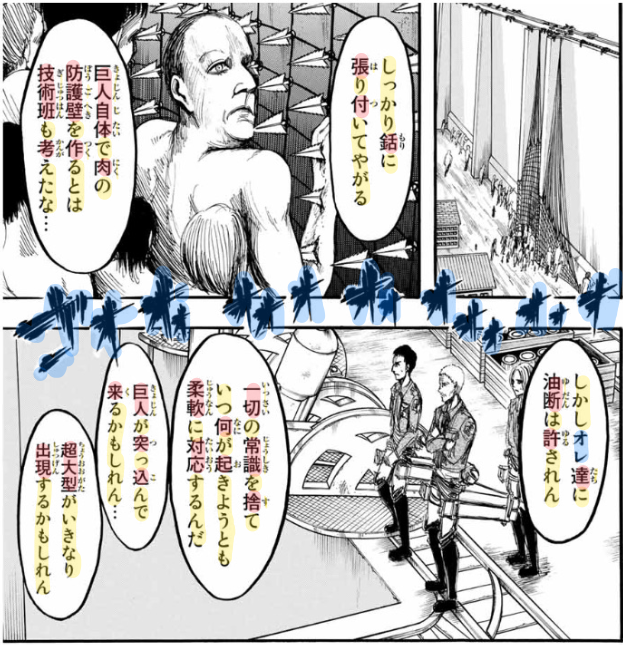
You’ll notice that this guide does not ask you to learn 漢字 (kanji)—Chinese characters adapted for Japanese—at this time. That’s because reading kanji is not strictly necessary to begin reading manga. All you need to know to start reading most manga is hiragana and katakana because kanji are frequently accompanied by phonetic notation known as ふりがな (furigana) that will allow you to read these Chinese characters.
For instance, look at the manga panel below from 進撃の巨人 (Attack on Titan). Hiragana is in yellow, katakana is in blue, and kanji is in red. You’ll notice that small hiragana characters accompany each of the kanji. This is furigana, and it’s the reason why knowing kanji is not a prerequisite to reading manga in Japanese.
Still, you probably noticed that kanji are heavily used in writing. That means you will benefit from learning kanji eventually, although I recommend you start learning them once you have gained a foundation in Japanese in Step 2. That’s because the major advantage of knowing kanji—helping you pick up vocabulary more quickly—becomes a major focus after you can start reading basic Japanese.
Ultimately, knowing kanji will provide a huge advantage for you when you start reading manga because it will reduce the time you spend referencing a dictionary. It will also allow you to read manga with kanji that lack furigana (or manga with furigana that is hard to read!).
However, if you are eager to begin studying kanji, or have the luxury of time to compress your foundation building, you can begin your kanji study now. If that’s you, go to Step 3 to start learning kanji. Otherwise, move on to Step 2.